The driver who hit me says he blacked out or fell asleep. Is he still responsible in Texas?
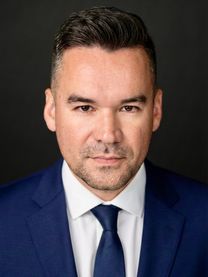
- Texas Attorney
- Yale B.A. · University of Houston Law Center J.D.
- Habla español
- Updated November 4, 2026
Usually, yes. Texas excuses a driver only for a truly sudden and unforeseeable loss of consciousness: under the sudden-emergency and unavoidable-accident instructions the Texas Supreme Court discussed in Reinhart v. Young (1995) and Dillard v. Texas Electric Cooperative (2005), the emergency must arise suddenly and unexpectedly and cannot be caused by the driver's own negligence, and you keep the burden of proving negligence while the driver needs real evidence to raise the excuse. A driver who knew about seizures, diabetic episodes or earlier blackouts, or who kept driving while tired, is generally not excused, and your own PIP coverage pays medical bills and lost income regardless of fault.
Tell me what happened
Jimmy reads every request himself and will be in touch with you shortly.
"I blacked out" is a defense Texas allows only in narrow cases
Many drivers say it after a crash: "I passed out," "I had a seizure," "I don't remember anything," or "I must have dozed off." Texas law does not treat any of those statements as an automatic excuse. A driver who loses consciousness can avoid responsibility only if the episode was sudden and could not have been foreseen. A Texas appeals court described the rule decades ago in First City National Bank of Houston v. Japhet (1965), a suit against the estate of a driver whose car left the road during a heart attack: a driver is excused for incapacity only on evidence of "a sudden and unanticipated loss of consciousness."
Our page on head-on collisions touches on this defense because it often comes up when a car crosses the center line. This page goes through how the defense actually works and how it is answered.
What are "sudden emergency" and "unavoidable accident" in Texas?
Texas handles this defense through two jury instructions, which the Texas Supreme Court calls inferential rebuttal instructions. They do not create a separate defense the jury votes on. They explain to the jury that it does not have to blame anyone if the evidence shows something beyond the parties' control caused the crash.
- Unavoidable accident is "an event not proximately caused by the negligence of any party to it." In Reinhart v. Young (Tex. 1995), which arose from a rear-end crash on Highway 59 near Houston, the Court said this instruction is most often used for physical conditions like fog, snow, sleet, slick pavement or an obstructed view.
- Sudden emergency, in the pattern wording the Court quoted in Dillard v. Texas Electric Cooperative (Tex. 2005), applies only to an emergency "arising suddenly and unexpectedly," which was "not proximately caused by any negligence on his part," and which required "immediate action without time for deliberation."
Both instructions are given only when the evidence raises the issue. A driver's bare statement that he "blacked out" is weak evidence when his medical records, his license file or his own conduct before the crash say otherwise.
Who has to prove what?
This is where many people are surprised. In Texas, these are not defenses the driver has to prove the way you have to prove your case. You keep the burden of proving that the driver was negligent and that the negligence caused the crash. The concurring and dissenting opinions in Reinhart both describe the burden that way.
In practice, though, the driver who claims a medical emergency has to come forward with real evidence of it: a diagnosis, a doctor, records showing the episode was the first of its kind. That is why these cases are won or lost on records. The questions are simple: Did this happen before? Did a doctor tell him not to drive? Did he skip his medication? Did he feel it coming and keep driving?
Is falling asleep at the wheel a "sudden emergency"?
Usually not. The emergency in the pattern instruction cannot be one the driver's own negligence caused, and driving while too tired to stay awake is conduct, not an act of nature. NHTSA's report on drowsy driving notes that many people "continue to drive even when they know they are drowsy and fighting to stay awake." Drifting across lane lines and hitting the rumble strip are among the warning signs NHTSA tells drivers to watch for.
Fall-asleep crashes also leave a recognizable trace. NHTSA observes that evidence of a corrective move, such as skid marks or brake lights, is usually absent in fall-asleep crashes. The vehicle's crash data, which records braking and steering in the seconds before impact, often shows the same thing. Texas crash reports have a contributing-factor code for "Fatigued or Asleep," and the officer's narrative may record what the driver said at the scene.
If the driver who fell asleep was driving an 18-wheeler, federal rules apply too. A commercial driver may not drive while his alertness is impaired, or likely to become impaired, through fatigue or illness, and the carrier may not require or permit it (49 C.F.R. § 392.3). Hours-of-service logs are covered on our page on proving truck driver fatigue.
Seizures, diabetes and prior episodes: what the records show
A driver who knew about a condition that can cause a blackout and drove anyway is in a very different position from someone who collapsed for the first time. Texas has a system built around exactly this question:
- The license application asks. The current Texas application (DPS form DL-14A, revised August 2025) asks, among other things, "Have you ever had an epileptic seizure, convulsion, loss of consciousness, or other seizure?", whether the applicant has diabetes requiring insulin, and whether they have ever been referred to the Medical Advisory Board.
- The Medical Advisory Board. DPS can ask the Board, a panel of physicians, whether a person with a medical condition can drive safely (Health & Safety Code § 12.095). DPS rules list when it refers a driver, for example a seizure within the past year for a regular license (37 Tex. Admin. Code § 15.58). DPS must revoke the license of a person it finds incapable of safely operating a vehicle (Transportation Code § 521.294).
- Medical records. Doctor-patient privilege in Texas has an exception when a party relies on a patient's condition as part of a claim or defense (Tex. R. Evid. 509(e)(4)). The Texas Supreme Court confirmed in 2024 that the exception is not limited to the patient's own claims. A driver who blames a medical episode generally puts that condition at issue, and the relevant records become part of the case.
What we look for: earlier seizures or fainting spells, emergency-room visits, prescriptions and whether they were being taken, a doctor's instructions not to drive, and the driver's answers on his license application. EMS records from the scene can matter too.
If the driver was a truck driver
Commercial drivers must be medically certified before they drive. Under 49 C.F.R. § 391.41, a driver is not physically qualified if he has epilepsy or any condition "likely to cause loss of consciousness or any loss of ability to control a commercial motor vehicle," and insulin-treated diabetes is disqualifying unless the driver meets a separate federal standard. A company that put a driver with a known seizure history behind the wheel may be responsible for its own negligence, even if the driver's last blackout was genuinely sudden. If the driver was working for any company, see hit by a company vehicle.
Whose insurance pays?
The driver's liability insurance pays for injuries he is legally responsible for, and Texas requires at least $30,000 per person (§ 601.072). If the excuse fails, as it usually does, his insurer pays. If his coverage is not enough, see damages bigger than the policy.
Two things about your own policy matter here. Your uninsured/underinsured motorist coverage pays what you are "legally entitled to recover" from the other driver (Ins. Code § 1952.101), so it depends on proving his negligence too. Your personal injury protection (PIP), if you have it, pays medical bills and lost income without regard to fault (§ 1952.151 et seq.), so it pays even while the driver argues he blacked out. See should I use my own insurance.
What to do now
Write down exactly what the driver said at the scene, and who heard it. Get medical care. Then let us do the rest. Once you hire us, we deal with every insurance company, request the crash report, the 911 call and the vehicles' crash data, and pursue the driver's medical and license history through the proper legal process. You talk with Jimmy directly by phone, text, email or video call, and in person when needed, wherever you are in Texas. In most cases you have two years from the crash to file suit (CPRC § 16.003).
Other ways people ask this
If the driver had a seizure, is anyone responsible?
Often yes. Texas excuses only a sudden, unforeseeable loss of consciousness. If the driver had seizures before, was told not to drive, or skipped medication, the episode was foreseeable and he can be held responsible.
Does the driver have to prove he blacked out?
Not in the way you have to prove your case. You keep the burden of proving negligence, but the driver needs real evidence, such as medical records and a doctor, before the jury is even instructed on a sudden emergency.
The driver fell asleep. Is that a sudden emergency?
Generally no. The emergency cannot be one the driver's own negligence caused, and driving while too tired to stay awake is usually that kind of conduct.
Can we get the other driver's medical records?
Often, through the court process. Texas Rule of Evidence 509(e)(4) removes doctor-patient privilege when a party relies on a patient's condition as part of a claim or defense, which is what a driver does when he blames a medical episode.
Does Texas take licenses away from drivers who have seizures?
DPS asks about seizures and loss of consciousness on the license application, can refer drivers to its Medical Advisory Board, and must revoke the license of anyone it finds incapable of driving safely (§ 521.294).
What if it was a truck driver?
Commercial drivers must be medically certified, and federal rules disqualify drivers with epilepsy or conditions likely to cause loss of consciousness (49 C.F.R. § 391.41). The trucking company can be responsible for its own negligence.
Will my insurance pay while the driver claims he blacked out?
Your PIP pays medical bills and lost income regardless of fault. Uninsured/underinsured motorist coverage depends on proving the other driver was legally responsible.
Authority: Reinhart v. Young, 906 S.W.2d 471 (Tex. 1995) (unavoidable accident; inferential rebuttal) · Dillard v. Texas Electric Cooperative, No. 03-0655 (Tex. Feb. 11, 2005) (sudden emergency; inferential rebuttal) · First City National Bank of Houston v. Japhet, 390 S.W.2d 70 (Tex. Civ. App. 1965) · In re Richardson Motorsports, Ltd., No. 22-1167 (Tex. May 10, 2024) (Tex. R. Evid. 509(e)(4)) · Texas DSHS — Medical Advisory Board for driver licensing · Texas DPS — Driver License Application, DL-14A (Rev. 8/2025) · 49 C.F.R. § 391.41 (physical qualifications for commercial drivers) · 49 C.F.R. § 392.3 (ill or fatigued operator) · NHTSA — Drowsy Driving and Automobile Crashes · Tex. Ins. Code § 1952.101 (uninsured/underinsured motorist coverage)
Your next steps, and ours
Write down what he said
Exact words at the scene ('I blacked out,' 'I dozed off'), who heard them, and the officer's name.
Call Jimmy
713-600-6233Free and confidential. You can talk with Jimmy directly, in English or Spanish.
We lock down the evidence
Crash data, the 911 call, bodycam and EMS records, before they are lost.
We test the excuse
Medical history, license file and, for a truck driver, his medical certificate, through the proper legal process.
Related questions
If someone else's negligence put you here, we take it from here
Car Accidents
Rear-endings, intersection crashes, uninsured drivers, hit-and-runs — in Houston, El Paso, and everywhere in between.
Truck & 18-Wheeler Crashes
Federal regulations, black-box data, driver logs, multiple insurers. We move fast to preserve evidence before it disappears.
Work Accidents
Hurt on the job for a non-subscriber employer, or injured by a third party at a job site? Texas gives you real options.
Wrongful Death
When the worst happens, we pursue accountability for surviving families with the care and seriousness it deserves.
¿Lastimado en un accidente? Hablemos — en español.
La consulta es gratis y confidencial. No paga nada a menos que ganemos su caso. Jimmy se comunicará con usted en breve. ¿Sin papeles? Usted tiene derechos.
Every day you wait, evidence disappears and the insurer gets ahead. One free call. Straight answers about your case — in English or Spanish. If you need a fighter, you'll have one, from the first call to the last check.